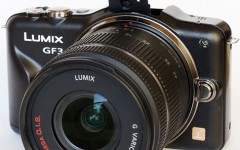

I’ve just published my review of the Panasonic Lumix FX37, a nice camera with an ultra-wide 5X optical zoom lens. Be sure to check out full-sized photos taken straight out of the camera in the Panasonic Lumix FX37 photo gallery as well.
Continue reading the FX37 review
Here’s the Panasonic Lumix FX37 Photo Gallery containing full-sized pictures taken by the camera. Be sure to check out the Panasonic Lumix FX37 review for more about the camera as well.
Read the rest of this entry »
With the reviews of both “compact, stylish, wide-angle lens” cameras, the Canon PowerShot SD880 IS Digital ELPH and the Panasonic Lumix FX37, we can now gauge the dogfight with the pro’s and cons of each camera.
Similarities between Canon SD880 and Panasonic FX37
- 10 effective megapixels
- 310 shot battery life (CIPA Standard)
- Redeye removal tool in shooting mode
- Point-and-shoot operation without manual controls
In favor of Canon PowerShot SD880 IS Digital ELPH/Digital IXUS 870 IS
- Larger LCD (3 inch versus 2.5 inch)
- Rear rotary wheel
- Face self-timer and redeye removal in playback mode
- Closer macro mode (2 cm versus 5 cm)
- Slow shutter mode (Selectable from 1 to 15 seconds)
In favor of Panasonic Lumix FX37/FX38
- Lens is wider, and also goes further (5X zoom versus 3.8X zoom)
- Smaller body design
- HD 720p movie recording (1280 x 720 versus 640 x 480)
- White balance adjustment (Select warmer/cooler colors)
- Starry sky “bulb” mode (Longer than SD880 but you only can select 15, 30 or 60 seconds)
Conclusion
In the end, both cameras are great choices; offering good image quality and being suitable for everyone. The main debate will boil down to “bigger LCD on the Canon” or “Panasonic having more zoom in a smaller camera”. I would say that Panasonic Lumix FX37 has a slight edge in terms of the versatility of its features while the Canon SD880 Digital ELPH is more for the style conscious or night scene/macro lovers.
Fujifilm has been strangely quiet over the past month but today they finally announced three compact cameras, including the latest in the F-series high-sensitivity line. One thing you’ll observe here is that the two entry-level models today, the FinePix A100/A150 support only SD/SDHC cards, dropping support xD-Picture card compatibility. Could this be the start of Fujifilm dropping support for the almost-proprietary xD-card they’ve been using with Olympus for years?

Fujifilm FinePix F200EXR
(High res and sensitivity compact)
- 12 effective megapixels (SuperCCD EXR sensor)
- 28 – 140 mm (f3.3 – f5.1) 5X optical zoom lens
- Sensor-shift image stabilization
- 3 inch LCD
- Three sensor modes: Fine capture (12 MP full resolution), pixel fusion (High ISO with low noise at 6 MP) and dual capture (6 MP HDR)
- Super Intelligent Flash to not overexpose macro pictures
- Portrait Enhancer (aka this is a “Beauty mode“)
- Full manual controls
- VGA 30 FPS movie mode with sound
- Takes xD/SD/SDHC memory cards
- Uses a lithium-ion battery
- Available in February for $400

Fujifilm FinePix A100/A150
(Budget entry-level models)
- 10 effective megapixels
- 36 – 107 mm (f3.1 – f5.6) 3X optical zoom lens
- 2.7 inch LCD (A100); 3 inch LCD (A150)
- No manual controls
- VGA 30 FPS movie mode with sound
- Takes SD/SDHC memory cards
- Uses 2 AA batteries
- Available in February for $130 (A150)

Get ready for two digital camera reviews today- I’m starting off with the Panasonic Lumix FX37 review and then the Panasonic Lumix LS80 review later in the day. Don’t worry, there are other brands, more reviews, to come towards this weekend so stay tuned for those as well.
Nikon released several new fixed lens cameras today (no digital SLRs though) including two new super zoom cameras and a few compact cameras.

Nikon Coolpix P90
(Super-zoom camera)
- 12 effective megapixels
- 26 – 624 mm (f2.8 – f5.0) 24X optical zoom lens
- Sensor-shift image stabilization
- 3 inch tilting LCD; EVF
- Smart Portrait activates face, smile and blink detection along with redeye fix
- 15 FPS sports mode (at 2 MP only!)
- Full manual controls
- VGA 30 FPS movie mode with sound
- Takes SD/SDHC memory cards
- Uses a lithium-ion battery
- Available in March for $400

Nikon Coolpix L100
(Low end super-zoom camera)
- 10 effective megapixels
- 28 – 420 mm (f3.5 – f5.4) 15X optical zoom lens
- Sensor-shift image stabilization
- 3 inch LCD
- Smart Portrait activates face, smile and blink detection along with redeye fix
- 13 FPS sports mode (at 3 MP only!)
- NO manual controls
- VGA 30 FPS movie mode with sound
- Takes SD/SDHC memory cards
- Uses 4 AA batteries
- Available in April for $280

Nikon Coolpix L19/L20
(Budget cameras)
- 8 effective megapixels (L19)
10 effective megapixels (L20)
- 41 – 145 mm (f3.1 – f6.7) 3.6X optical zoom lens (L19)
38 – 136 mm (f3.1 – f6.7) 3.6X optical zoom lens (L20)
- 2.7 inch LCD (L19);3 inch LCD (L20)
- Smart Portrait activates face, smile and blink detection along with redeye fix
- Auto scene selection
- Full manual controls
- VGA 30 FPS movie mode with sound
- Takes SD/SDHC memory cards
- Uses 2 AA batteries
- Available in March for $400
- Comes in silver (L19 only) and red (L20 only)

Nikon Coolpix S620/S630
(Compact point-and-shoot cameras)
- 12 effective megapixels
- 28 – 112 mm (f2.7 – f5.8) 4X optical zoom lens (S620)
37 – 260 mm (f3.5 – f5.3) 7X optical zoom lens (S630)
- Optical image stabilization (S620)
Sensor-shift image stabilization (S630)
- 3 inch LCD
- Smart Portrait activates face, smile and blink detection along with redeye fix
- Auto scene selection
- No manual controls
- VGA 30 FPS movie mode with sound
- Takes SD/SDHC memory cards
- Uses a lithium-ion battery
- Available in February for $270 (S620) and $280 (S630)
- S620 comes in silver, black, blue, purple or pink
S630 comes in silver, black, blue, purple or red

Nikon Coolpix S220/S230
(Budget point-and-shoot cameras)
- 10 effective megapixels
- 35 – 105 mm (f3.1 – f5.9) 3X optical zoom lens
- 2.5 inch normal LCD (S220); 3 inch touchscreen (S230)
- Smart Portrait activates face, smile and blink detection along with redeye fix
- Auto scene selection
- No manual controls
- VGA 30 FPS movie mode with sound
- Takes SD/SDHC memory cards
- Uses a lithium-ion battery
- Available in February for $150 (S220) and $230 (S230)
- S220 comes in silver, black, blue, purple or green
S630 comes in silver, black, blue, purple or red
With the first wave of camera announcements for the year over and more to come as we approach PMA 2009 in March, here are some digital camera trends we’re gonna see this year:
- 12 megapixels is the new “10 megapixels” and 18 megapixels will be the new “15 megapixels”. Remember all those 10 megapixel ultra-compact cameras we saw last year? Well, that’s out of fashion now and this year we’ll be seeing new 12 megapixel ultra-compact cameras… and well, I hope camera manufacturers have taken steps to keep noise levels around the same, or less (wishful thinking), as last year’s 10 MP models.
- Beauty modes – What’s the latest “gimmick feature” this year? Forget Face Detection, just about all cameras have that now… and no, Smile Detection was sooo 2008. In 2009, we have “Beauty modes” popping up on camera makers’ latest models which remove blemishes, pimples, wrinkles and the like. We’ll see how well “Beauty mode” works in real life on various cameras once I get my hands on the latest stuff.
- Intelligent auto modes – Ever picked up a camera and felt lazy to adjust shutter speed, ISO or even pick a scene mode? Well apparently “Intelligent Auto” or “Smart Auto” or whatever camera makers call them, will automatically detect the scene you’re framing and pick a mode for you. Panasonic decided to start early by having this mode on their cameras last year (and so far, Intelligent Auto on their cameras seem to work fine) before everyone else started doing the same this year.
- Easy/Simple modes can also save your life and/or your picture when your camera is in the hands of someone who doesn’t know how to use even the simplest of point-and-snap cameras; who may accidentally bump the controls of your camera, potentially ruining your settings for the current/next shot. Easy/Simple modes are so basic that the only thing a person can do is change the flash setting… and even then it reverts back to “Auto Flash” every time you power off the camera.
- HD movie mode will be everywhere. I’m sure more and more cameras this year will have a HD movie mode of some sort, mostly 720p (1280 x 720) at 24 or 30 FPS I anticipate, so we can all once again fill up our hard disks screens with video.
Of course, as we move through the year, there may be several “unexpected things”, aka revolutionary features, (last year it was the live view-only Panasonic G1) which I look forward to seeing as these things usually make the digital camera arena more interesting.